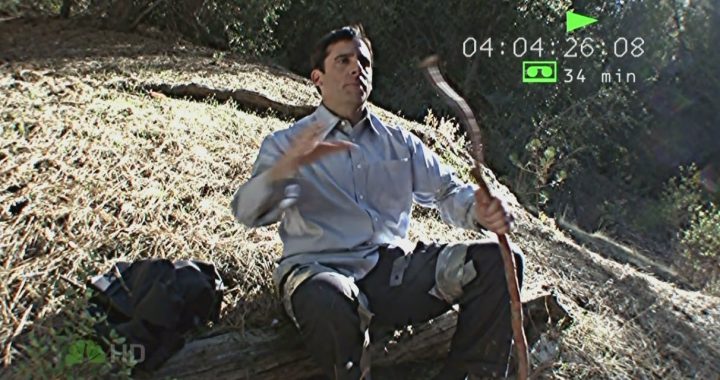
Is there a parallel between elements needed for basic survival and management techniques deployed by companies? I think so. Here’s why.
I’ve been watching quite a lot of reality survivor type TV series of late. There are two types that I’ve seen usually. Those where rank amateurs are paired up to survive x number of days and those where a past British SAS officer or like professional is required to thrive in seemingly hostile terrain. These are great TV viewing examples and I’ve often pondered how one could learn from these select few and transpose that knowledge into daily corporate management.
Some managers I’ve worked for previously seemed to be very slow at adaptation and foresight. Others recognized the changing tides and planned appropriately. All were very skilled in the business of managing people and schedules but were seemingly beset and overwhelmed by the daily grind. Similar to the amateur survivalists, I witnessed a default to “safe mode” and the dogged grasp of outmoded suburban rules despite being out in the wild (more about this in the next post). These survivors often would spend a few days building a weak shelter, then when the pangs of hunger strikes, forage for food. When their thirst heightens they would look for water; when bitter cold sets in they would muster a fire and then fortify their original shelter if weather conditions worsened. All this appears to happen in a stark linear fashion (perhaps it is TV editing, but nonetheless) and are decidedly reactive approaches to externalities. I’ve observed this similarity amongst managers as well. The linearity of tasks delegated dependant on the severity of urgency. Some managers/survivalists would often stay put when most needs were met. Without a foreboding deadline looming, very little (in terms of optionality) gets accomplished. Few survivors do manage to “survive” despite having lost quite a lot of body weight, emerge “victorious” albeit covered in filth, and emotionally jarred from their ordeal. Do managers often not capitulate to that same kind of outcomes? The task may have been successful but at what uncertain long term cost? No time to reflect on this, as another task is ready at the helm. And so….success is unitized, demarcated and boxed into its traditional linear place. One win will move us forward by an inch.
In contrast to this, the professional survivor does the same things (food, fire, shelter, water) but in a very different order and manner (see if you can relate the below to management philosophies). He surveys the terrain for some time, knowing full well how long his belly reserve of food will last him. During this time he forages for weapons, fire lighting material, looking for water wells/catchment containers and animal tracks. Once he understands his environment he looks for a good intersection zone to build a shelter. The zone must be distanced from animal tracks but close to sources of food and water. A new zone may need to be located elsewhere if survival chances appear slim. This decision is made without hesitation. The immediacy of it is so abrasively different to the amateur group. He usually does not build a shelter immediately as that depletes the energy reserve far too quickly. Only once water and food sources are attainable does he put roots down to build his stately residence. Fire is first, as that is used to boil water which extends his survival chances. Energy is what he requires so almost anything is edible (even the yucky insects that the amateurs overlook). With the right amount of energy a shelter or weapons are made so that hunting prey is an option available. The shelter is primarily used for resting which he does much much less than the amateurs. Time is wisely spent building, creating, boiling, foraging, surveying, fishing, etc.
Now if that were a manager, how much success would your company have? The professional survivors’ utilization of his skill can be a differentiator between a good manager and a great one. His multitasking capabilities are not dependant on external events. They are done in preparation for them. A situation might arise where he might need a knife. Without one, time is lost on making the knife rather than capitalizing on the opportunities a knife might bring. Now I’m not saying managers should walk in to corporate HQ tomorrow with a knife. But rather, understand that a knife is a tool. Similar to how your people are uniquely poised to alleviate the corporate burdens if well equipped. Instead of dutifully doing the chores, pursue optionality. Train staff on elements that are not necessarily unique for doing their own jobs, but for doing their managers’ one. Broaden their horizons. Look deeper into where you can position your team. Flesh out the radius of your department and remove wasted effort. Build in redundancies within your teams. Mix the skills within teams, and have each champion to the next their specialities. Fresher eyes can only clarify your perspectives.
SimpleAlpha actively seeks these boundaries of thought that constrain management performance.