I recently heard an advert claiming Gold had risen by more than 3000% in our lifetime and coupled with the investment and cultural appeal this asset class has, I attempt to distil fact from fiction. Many “investment” pundits and elders from my community are firm advocates of gold as a retirement vehicle and urge me to pursue that avenue. The radio provides me with half-hourly updates on the price of this precious metal and perhaps I should heed their calls in a more serious light.
Any facts from marketing/media houses will be discounted in this post, as they have an inherent interest in skewing information to suit their agenda. Let’s define what is meant by a lifetime. According to StatsSA: “Life expectancy at birth for 2015 is estimated at 60,6 years for males and 64,3 years for females.” Using this information as a proxy, approximately 64 years ago the price of an ounce of gold was $38.70 according to www.onlygold.com. The average exchange rate that year per www.fxtop.com was 0.714286 ZAR/USD. Tabulated below is a summary of up to todays date.
| Year | Average Dollar Price per ounce of gold | Exchange rate: ZAR/USD | Average ZAR Price per ounce of gold |
| 1952 | $ 38.70 | 0.714286 | R 27.64 |
| 2016 | $ 1,257.08 | 14.921603 | R 18,757.65 |
| Growth = 3148% | Growth 67,757% | ||
| 64 year | CAGR = 6% | Therefore = 5% | CAGR = 11% |
| Source: www.onlygold.com | Source: www.fxtop.com |
The claim by the advert is thus warranted as the dollar price of gold has in fact appreciated by more than 3000% in the average lifetime to date.
A South African purchaser of gold in 1952 would have witnessed an 11% CAGR in their investment, 6% arising from the commodity appreciation and 5% attributed to a devalued ZAR exchange rate.
Other notable factors excluded from the analysis were the holding cost for gold, either vaulted by a bank or insurance costs if held individually. The analysis also did not account for pricing differentials by brokers who usually sell gold at a premium to the spot rate and repurchase at a discount thereof.
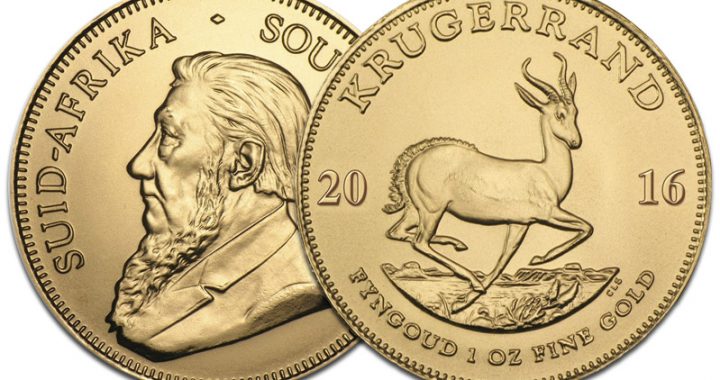
Furthermore, brokers of late have been selling gold derivative products, such as the Mandela coin, whose value is not primarily linked to gold the commodity but rather the coins’ rarity. I have witnessed a sales pitch where a coin was likened to a Kruger coin and their analysis was primarily based on the gold price appreciation leaving an investor to believe that his growth is intimately tied to that commodity as advertised. The coin is marketed alongside Kruger coins and is deceptively gold in appearance and weighted similarly. A compelling analogue to the uninformed. If that investor were to exit, he will find out years later, when sales people have long disappeared, that the coin has no intrinsic gold value but rather a rarity factor (that’s incalculable by him, off course).
The 11% CAGR is thus, in my view at the least, the maximum attainable return on an ounce of Gold as an investment choice per average lifetime ending in 2016.